
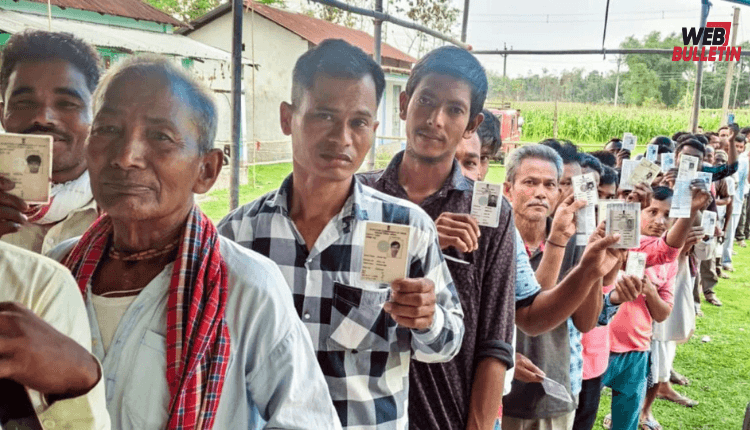
The first phase of the West Bengal Assembly elections recorded an impressive voter turnout of nearly 93 percent, setting a new benchmark for electoral participation in the state. While the figure has been widely celebrated as a strong endorsement of democratic engagement, it has also triggered a parallel debate over the impact of revised voter rolls.
The unusually high turnout comes in the backdrop of a Special Intensive Revision (SIR) of electoral rolls ordered by the Election Commission of India. The exercise aimed to remove duplicate, deceased, and ineligible voters, but ended up eliminating an estimated 9 million names—around 12 percent of the electorate—just days before polling.
Despite objections from the ruling All India Trinamool Congress and civil society groups, the revision was upheld by the Supreme Court of India. Following this, the total voter base shrank significantly, leading analysts to question whether the turnout percentage accurately reflects voter enthusiasm or is influenced by the reduced denominator.
For Phase 1, the revised electorate stood at approximately 3.61 crore, out of which about 3.35 crore votes were cast, resulting in a turnout of roughly 92.8 percent. Both the opposition Bharatiya Janata Party and the Trinamool Congress have claimed the high participation as a sign of public support, each interpreting the numbers to suit their political narrative.
Union Home Minister Amit Shah suggested that high turnout typically signals a desire for political change, while Chief Minister Mamata Banerjee argued it reflects public resolve to safeguard rights and reject the opposition’s claims.
However, critics point out that the removal of a large number of voters may have artificially inflated turnout percentages. Estimates suggest that if the original voter base had remained intact, the increase in turnout compared to the 2021 elections would have been marginal.
The revision has also sparked political concerns regarding its impact on electoral outcomes. Reports indicate that a significant portion of deletions occurred in constituencies previously dominated by the Trinamool Congress, particularly in districts with sizeable minority populations such as Murshidabad, Malda, and North and South 24 Parganas.
At the same time, some constituencies favorable to the BJP have also seen notable deletions, suggesting that the effects of the revision may not be one-sided. In closely contested seats, even small shifts in voter rolls could alter results, especially where victory margins have historically been narrow.
With many seats in past elections decided by slim margins, analysts believe the combination of high turnout and a reduced voter base could make outcomes less predictable. The focus now shifts to the second phase of polling, where both major parties are expected to intensify efforts to consolidate support.
While the turnout figure stands as a testament to active voter participation, the broader implications of the revised rolls continue to shape the political discourse around the elections.