
Negotiations on a proposed India–US trade agreement may face fresh hurdles, with pulse imports becoming the latest point of disagreement. Two US lawmakers have urged former President Donald Trump to press India to withdraw its 30 per cent import duty on American pulses, arguing that the levy places US farmers at a clear disadvantage in the Indian market.
The development comes at a sensitive time, as trade discussions between New Delhi and Washington are already strained following reciprocal tariff measures imposed by both sides.
US Lawmakers Flag “Unfair” Tariffs
In a letter addressed to Trump, Republican Senators Steve Daines of Montana and Kevin Cramer of North Dakota said Indian tariffs on pulses are hurting American producers. The senators represent states that are among the largest pulse-producing regions in the US, particularly for crops such as peas.
They highlighted that India is the world’s biggest consumer of pulses, accounting for nearly 27 per cent of global consumption, making access to the Indian market critical for US exporters.
India’s Tariff Move Under Scrutiny
India consumes a wide range of pulses, including lentils, chickpeas, dried beans and peas. However, imports of these products from the US have faced high duties in recent years.
According to the lawmakers, India announced a 30 per cent import duty on yellow peas on October 30 last year, which came into effect on November 1, 2025. They argued that such measures have made it difficult for American farmers to compete, despite the quality of US produce.
The tariff decision followed the Trump administration’s earlier move to impose 50 per cent punitive tariffs on certain trade with India, further complicating bilateral trade relations.
Call for Engagement With India
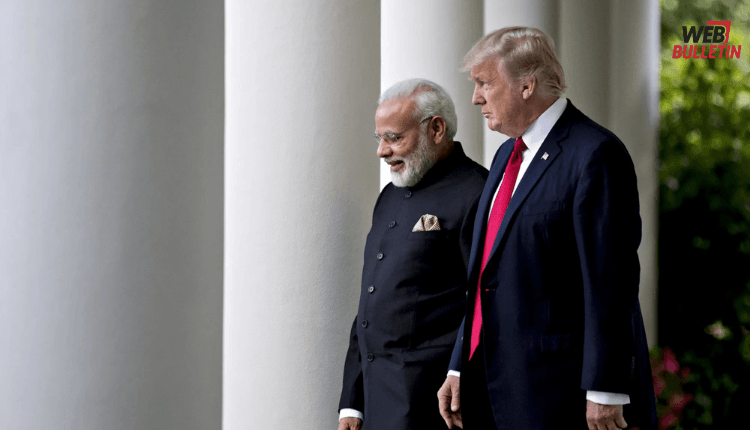
The senators suggested that Trump raise the issue directly with Prime Minister Narendra Modi, stating that reducing pulse tariffs could strengthen economic cooperation between the two countries. They said easing trade barriers would benefit not only US farmers but also Indian consumers by improving supply and price stability.
They also encouraged Trump to ensure that any future trade agreement with India includes favourable provisions for US pulse exports.
Reference to Earlier Trade Talks
In their letter, the lawmakers recalled that they had raised similar concerns during Trump’s first term, ahead of the 2020 trade negotiations with India. They claimed that Trump had personally delivered their letter to Prime Minister Modi, which helped bring US pulse producers into trade discussions at the time.
They also pointed to the period after India was removed from the US Generalised System of Preferences (GSP) in June 2019, when additional duties were imposed on American exports, further impacting US agricultural producers.
Farmers Ready to Expand Exports, Say Senators
The lawmakers concluded by saying that American farmers have the capacity to meet global demand if trade barriers are reduced. As the US seeks to address trade imbalances, they argued, agriculture could play a key role—provided export opportunities are expanded.
With pulses now added to the list of contentious issues, analysts say the road ahead for the India–US trade deal could become more complex in the coming months.