

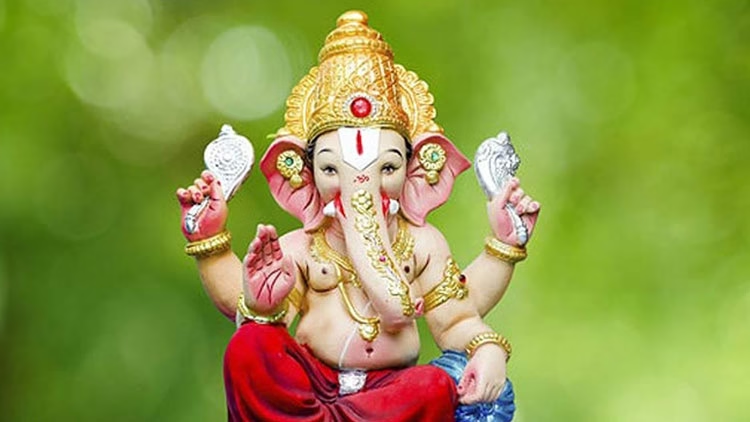
Lord Ganesha, revered as the elephant-headed deity in Hindu iconography, is worshipped at the beginning of all rituals and auspicious works. Known as the remover of obstacles (Vighneshwara), he is the divine symbol of wisdom, prosperity, and protection. As the elder son of Lord Shiva and Goddess Parvati, and elder brother of Kartikeya (Skanda), Ganesha is the presiding deity of the Ganapatya sect.
He resides at the Muladhara Chakra (the root energy center), symbolizing the foundation of spiritual and worldly journeys. His birth story, where Shiva placed an elephant’s head on Parvati’s guardian child, signifies transformation, sacrifice, and divine power.
Ganesha is worshipped across India under many names such as Ganapati, Vinayaka, Pillaiyar, and Vighneshwara. He symbolizes intellect (Buddhi) and accomplishment (Siddhi), often depicted with his broken tusk (Ekadanta)—a reminder of his sacrifice while writing the Mahabharata as dictated by Sage Vyasa.
According to the Mudgala Purana, Ganesha embodies eight divine functions—conquering ego, pride, envy, delusion, greed, anger, lust, and selfishness. He is also celebrated in 32 sacred forms, each carrying deep symbolic meaning, from the child-like Bala Ganapati to the fierce warrior Veera Ganapati, to the compassionate Sankatahara Ganapati.
His attributes—the broken tusk, modak (sweet), noose (pasha), goad (ankusha), and his vehicle, the mouse (mushika)—all hold profound symbolic meanings. Ganesha is considered the guardian of dharma, patron of arts and learning, and the embodiment of cosmic sound Om (ॐ).


