
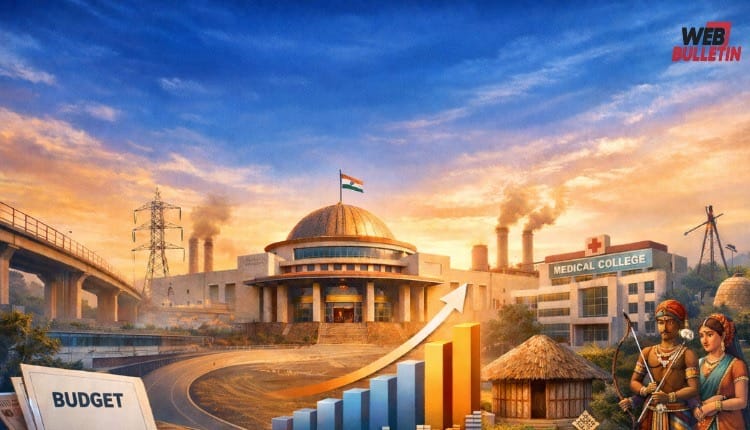
The Chhattisgarh government has unveiled an estimated budget of ₹1.72 lakh crore for the financial year 2026–27, outlining an ambitious roadmap for inclusive and infrastructure-led growth. Presenting the budget in the Assembly, Finance Minister O. P. Choudhary described it as a “Sankalp” (Resolution) budget aimed at transforming policy commitments into measurable outcomes.
Highlighting the state’s fiscal journey, the minister noted that at the time of Chhattisgarh’s formation, the budget stood at around ₹5,000 crore. It has now expanded more than thirtyfold, reflecting the state’s economic progress and expanding development agenda.
The ‘Sankalp’ Framework
This is the government’s third budget built around a thematic vision, following earlier themes of “Gyan” (Knowledge) and “Gati” (Speed). The current “Sankalp” framework is structured around seven pillars: inclusive growth, infrastructure expansion, investment promotion, skilled human resources, upliftment of the last mile (Antyodaya), livelihood generation, and delivering results through effective policy implementation.
Special Push for Bastar and Surguja
The tribal regions of Bastar and Surguja feature prominently in the budget announcements. The government has allocated targeted funds to strengthen education, health services, connectivity, sports, and employment opportunities in these areas.
Key allocations include ₹100 crore for the establishment of Education Cities in Abujhmad and Jagargunda, ₹5 crore for the Bastar Net connectivity project, and ₹75 crore each for the Bastar and Surguja Development Authorities. Additionally, ₹2,024 crore has been earmarked for the construction of the Matanar and Deurgaon barrages to boost irrigation and regional development. The state also announced the creation of 1,500 new posts under the Bastar Fighters initiative and ₹22 crore for organizing regional Olympics.
Agriculture and Rural Welfare
Agriculture remains a core focus area. The Krishak Unnati Yojana has been allocated ₹10,000 crore to enhance farm productivity and farmer income. A provision of ₹5,500 crore has been made for electricity bill subsidies for agricultural pump connections. Another ₹600 crore has been set aside for the welfare of farmers and landless agricultural labourers, while ₹60 crore has been allocated as a bonus for sugarcane growers.
The finance minister emphasized that profitable farming and farmer prosperity are central to the state’s development strategy.
Women, Child Development and Social Support
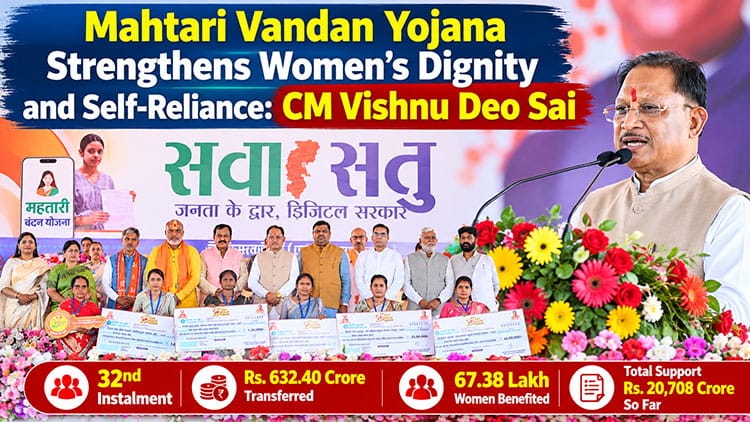
The Mahtari Vandan Yojana has received a significant allocation of ₹8,200 crore. An additional ₹2,320 crore has been provided for strengthening anganwadi services and nutrition programs. The Women and Child Development Department has been granted ₹10,857 crore in total. The government also announced a 50 percent concession in stamp duty for property registrations in the name of women.
Youth, Education and Skill Development
A total of ₹1,097 crore has been earmarked for youth-focused initiatives. Infrastructure upgrades in ITIs and polytechnic institutions will receive ₹50 crore. Competitive exam support schemes such as CG ACE, Udaan, Shikhar and Manzil have been allocated ₹33 crore. Grants worth ₹731 crore have been provided to state universities, and five government colleges will be upgraded into Centres of Excellence.
Industry and Infrastructure Expansion
The state plans to establish 23 new industrial parks with an allocation of ₹250 crore, along with ₹200 crore to facilitate industrial land development. Major investments have also been announced in road and power infrastructure.
Under the Pradhan Mantri Gram Sadak Yojana, ₹1,700 crore has been allocated, while the Public Works Department will receive ₹9,450 crore. The Mukhyamantri Drutgami Road Connectivity Scheme has been allotted ₹200 crore. For renewable energy expansion under the Pradhan Mantri Suryaghar Free Electricity Scheme, ₹400 crore has been set aside, along with ₹100 crore for setting up 90 new power substations. Air connectivity is also set to improve with the expansion of services in Jagdalpur and Ambikapur.
Healthcare Strengthening
The budget includes provisions for a 200-bed Mother and Child Health (MCH) hospital in Raipur’s Kalibari area and a new district hospital in Chirimiri. Medical colleges will be established in multiple districts, including Dantewada, Manendragarh, Kabirdham, Janjgir-Champa and Kunkuri. Additionally, ₹100 crore has been allocated to introduce cashless medical facilities for state government employees.
Tribal Upliftment and Special Schemes
The Dharati Aaba Tribal Village Utkarsh Abhiyan will receive ₹200 crore, while ₹60 crore has been earmarked for the Charan Paduka scheme benefiting tendu leaf collectors.
A Poetic Close to the Budget Speech
Concluding his address, Finance Minister O. P. Choudhary adopted a poetic tone, stating that he had come “with the sacred soil of Chhattisgarh on his forehead,” symbolizing commitment and dedication to the state’s development.
According to the government, the 2026–27 budget is not merely a statement of expenditure but a structured resolution aimed at accelerating Chhattisgarh’s journey toward inclusive growth and self-reliance.