

Raipur 17 october 25/ Under the state government’s comprehensive anti-Naxal policy and its continuous focus on peace, dialogue, and development, Bastar Division today witnessed a historic success in the campaign against extremism. As part of the “Poona Marghen – Rehabilitation for Rebirth” program, 210 Maoist cadres from the Dandakaranya region have renounced violence and chosen to return to the mainstream of society.
This mass surrender symbolizes a new dawn of trust, security, and development in Bastar. In the long Naxal-affected regions of Abujhmad and North Bastar, this historic event marks a decisive turning point in the campaign for Naxal eradication.
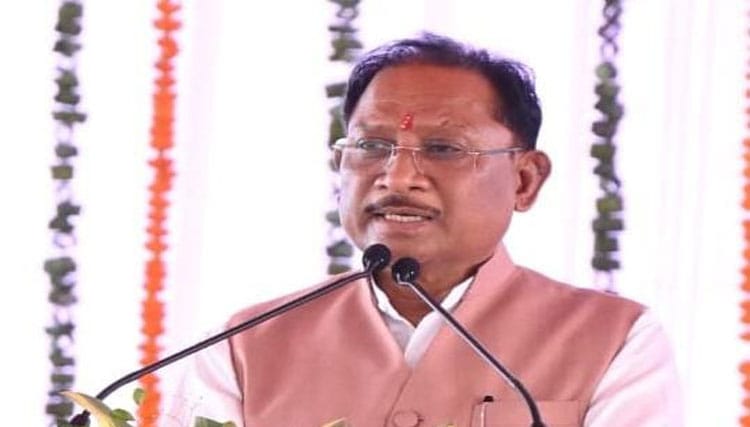
Under the leadership of Chief Minister Vishnu Deo Sai, the state government’s inclusive anti-Naxal strategy has laid a strong foundation for lasting peace in the region. Through coordinated efforts of the police, security forces, local administration, social organizations, and vigilant citizens, the culture of violence is being transformed into a culture of dialogue and development.
For the first time in the history of anti-Naxal operations, such a large number of senior Maoist cadres have surrendered together. Among those who surrendered are one Central Committee member, four DKSZC members, and 21 Divisional Committee members, along with many other senior Maoist leaders. They handed over 153 sophisticated weapons, including AK-47s, SLRs, INSAS rifles, and LMGs. This is not just the surrender of weapons, but a symbolic end to an era of fear and violence — a declaration marking the beginning of peace and trust in Bastar.
Prominent Maoist leaders returning to the mainstream include CCM Rupesh alias Satish, DKSZC members Bhaskar alias Rajman Mandavi, Ranita, Raju Salam, Dhannu Vetti alias Santu, and RCM Ratan Elam, among several other wanted and rewarded cadres. All of them expressed faith in the Constitution and resolved to lead a dignified life within the democratic framework.
The historic event took place at the Jagdalpur Police Line Ground, where the surrendered cadres were welcomed with the traditional Manjhi-Chalki ceremony. Each of them was presented with a copy of the Constitution and a red rose — symbolizing peace, love, and a new beginning.
Speaking on the occasion, Director General of Police (DGP) Arun Dev Gautam said, “Poona Marghen is not merely a process of leaving violence behind; it is an opportunity to rediscover life. Those who have returned today will become ambassadors of peace, development, and trust in Bastar.” He urged the surrendered cadres to channel their energy towards building society.
The event was attended by ADG (Naxal Operations) Vivekanand Sinha, Bastar Range CRPF officials, Commissioner Doman Singh, IG Bastar Range Sundarraj P., Collector Haris S., police superintendents of all Bastar districts, senior officers, and representatives of social organizations.
During the program, the police department briefed the surrendered cadres about rehabilitation grants, housing, and livelihood schemes. The state government reaffirmed its commitment to connecting these youths with self-employment, skill development, and education so that they can lead self-reliant and dignified lives.
Representatives of the Manjhi-Chalki community stated that Bastar’s tradition has always symbolized harmony, coexistence, and peace. Those who have now returned will strengthen this heritage and reinforce the foundation of trust in society.
The event concluded with all surrendered cadres taking an oath to uphold the Constitution and remain loyal to democratic values. They pledged to contribute to nation-building through development, not violence.
With the resounding chorus of “Vande Mataram,” the program came to an end — marking not merely the surrender of 210 Maoist cadres but the dawn of a new era of trust, development, and peace in Bastar.