
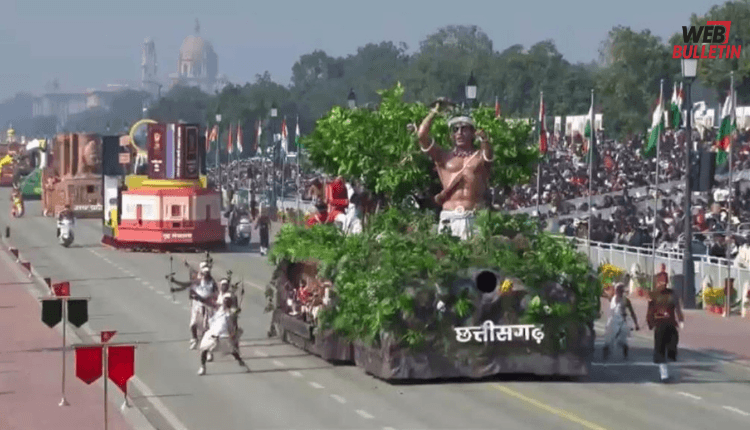
The Chhattisgarh tableau at the Republic Day parade on Kartavya Path presented a visually striking portrayal of India’s first Tribal Digital Museum, earning widespread admiration from spectators and national and international dignitaries.
Tribute to Tribal Heroes of the Freedom Struggle
The tableau paid homage to legendary tribal leaders who resisted British colonial oppression and made supreme sacrifices for India’s freedom. Through powerful visuals and symbolic elements, it highlighted the long-ignored role of tribal communities in the national freedom movement.
Warm Reception by National and Global Leaders
As the tableau passed the saluting base, it was greeted with applause and waves from the chief guests of the 77th Republic Day celebrations — President of the European Council Antonio Costa and President of the European Commission Ursula von der Leyen — along with President Droupadi Murmu, Prime Minister Narendra Modi, and Defence Minister Rajnath Singh.
Folk Performance Adds Cultural Grandeur
Adding vibrancy to the presentation, folk artists from Chhattisgarh performed the traditional Dhurwa community dance in front of the tableau. The cultural performance further captivated the audience and drew loud applause along Kartavya Path.
A Museum Preserving Tribal Legacy
Built at an estimated cost of ₹50 crore, the Tribal Digital Museum stands as a lasting tribute to the contribution of tribal communities to India’s independence. The museum is designed to engage future generations by preserving stories of courage, resistance, and sacrifice through modern digital storytelling.
14 Galleries, 650 Sculptures Tell Stories of Resistance
The museum spans 14 thematic galleries and features more than 650 sculptures that vividly depict major tribal uprisings during British rule. These exhibits chronicle the collective struggle of tribal communities across different regions and periods.
Veer Gundadhur and the Bhumkal Rebellion
The front section of the tableau featured Veer Gundadhur, the iconic leader of the 1910 Bhumkal Rebellion and a revered figure of the Dhurva community. Symbolic elements such as mango branches and dried chilies represented unity and resistance. Despite the British administration deploying additional troops from Nagpur, Gundadhur remained undefeated and uncaptured.
Veer Narayan Singh Honoured as Chhattisgarh’s First Martyr
At the rear of the tableau was the powerful depiction of Veer Narayan Singh, Chhattisgarh’s first martyr, shown on horseback wielding a sword. A champion of the poor during a devastating famine, he emerged as a key figure in the First War of Independence in 1857.
A Powerful Message of Pride and Patriotism
The Chhattisgarh tableau stood as a compelling reminder of the tribal community’s unbreakable spirit and unwavering patriotism, reinforcing their vital role in India’s journey to freedom and their enduring place in the nation’s history.