

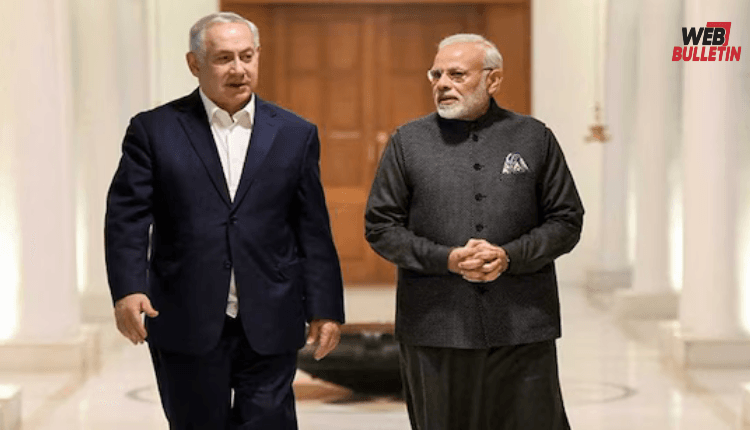
Indian Prime Minister Narendra Modi is set to begin a two-day visit to Israel on Wednesday, a trip both governments describe as an opportunity to further expand strategic cooperation. The visit comes at a sensitive moment for the region, with tensions escalating over the possibility of military confrontation between the United States and Iran.
Modi made history in 2017 as the first Indian prime minister to visit Israel. Nearly a decade later, both he and Israeli Prime Minister Benjamin Netanyahu remain in office and continue to share a close political rapport. Officials from both countries suggest the latest visit aims to build on that relationship and explore new areas of collaboration.
Talks between the two leaders are expected to focus on defence cooperation, technology partnerships, and emerging sectors such as artificial intelligence. Israel has been seeking to expand its global defence exports, and India remains one of its key strategic partners in Asia.
An Israeli government official said the visit could open the door to fresh partnerships across multiple sectors, adding that bilateral ties are poised for a substantial upgrade. During the trip, Modi is also scheduled to address the Knesset, Israel’s parliament, and pay tribute at Yad Vashem, the country’s official Holocaust memorial.
Visit Coincides with Heightened Regional Uncertainty
The diplomatic engagement unfolds against the backdrop of increased U.S. military deployments near Iran. Washington has strengthened its naval presence in the region amid stalled negotiations over Tehran’s nuclear programme. Reports indicate that additional American military assets, including an aircraft carrier, have been positioned in the Mediterranean.
Any direct confrontation between the United States and Iran could have wider regional consequences, potentially involving Israel and affecting Gulf countries where a large Indian diaspora resides. Millions of Indians living in the Gulf contribute significantly to India’s economy through remittances, making regional stability a key concern for New Delhi.
Strategic analysts believe India is keen to avoid escalation. Kabir Taneja of the Observer Research Foundation noted that New Delhi has consistently favoured diplomatic solutions in West Asia and is likely to convey its preference for stability during high-level discussions.
Israeli officials have indicated that regional security issues may form part of the dialogue. Prime Minister Netanyahu recently described India as a potential partner in what he termed a future grouping of like-minded nations confronting both “radical Shi’ite” and “radical Sunni” forces — a reference widely interpreted as directed at Iran and extremist movements in the region.
While India maintains strong defence ties with Israel, experts suggest New Delhi would be cautious about entering into any formal strategic bloc, given its long-standing policy of maintaining strategic autonomy and non-alignment in global affairs.
The visit is expected to reinforce the growing India–Israel partnership while carefully navigating the complex geopolitical dynamics shaping the region.