
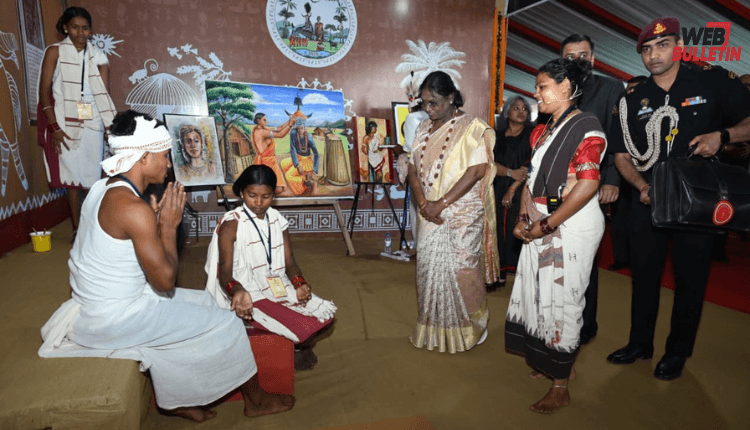
President Droupadi Murmu, who arrived in Chhattisgarh to attend the inauguration of Bastar Pandum, visited an elaborate exhibition celebrating the rich tribal traditions, culture, and craftsmanship of the Bastar region. The exhibition offered a vibrant glimpse into the indigenous heritage rooted in the soil of Bastar.
During her visit, the President toured several stalls and interacted with local artisans and residents, seeking detailed insights into the traditional art forms and products on display. She described Bastar Pandum as a powerful platform for preserving tribal heritage and introducing it to a global audience.
The exhibition featured a wide range of indigenous crafts, including Dhokra metal art, terracotta, wood carving, sisal and bamboo crafts, wrought iron works, tribal costumes and jewellery, Tumba art, traditional Bastar paintings, local cuisine, and folk illustrations. President Murmu appreciated the creativity and skill reflected in each exhibit.
Special attention was drawn to the Dhokra craft, an ancient tribal metal art that uses the lost-wax casting technique. Artisans explained that each piece is handcrafted using natural materials such as clay, wax, wire, and brass, portraying themes inspired by nature, deities, and rural life. Terracotta sculptures depicting folk beliefs and everyday village scenes were also prominently displayed.
The wood carving section showcased finely detailed sculptures created from teak, bija, sal, and other indigenous woods, representing cultural and religious motifs. The President also reviewed sisal-based jute textiles and handicrafts that highlighted sustainable craftsmanship.
Stalls featuring bamboo products displayed both utility and decorative items, while the wrought iron art section impressed visitors with its robust yet artistic creations. Tribal jewellery stalls attracted special interest, presenting handmade ornaments crafted from silver, shells, beads, and mixed metals—symbolizing tribal identity and social traditions.
The exhibition also included Tumba art, where musical instruments and decorative objects made from dried gourds were displayed. Traditional attire and ornaments of Bastar’s major tribal communities—Dandami Maria, Abujhmaria, Muria, Bhatra, and Halba—were showcased by local youth, offering a living representation of tribal culture.
President Murmu also visited the tribal painting gallery, which portrayed indigenous life, forests, festivals, and folklore through earthy colours and symbolic patterns. These paintings reflect a cultural legacy passed down through generations.
The local cuisine section displayed traditional foods and beverages commonly consumed in tribal households, including jondhra laddoos, mandia pej, aamath, chapda chutney, bhenda chutney, kulthi dal, pan bobo, tikhur, along with beverages such as landa and salfi.
The folk life gallery presented photographs, illustrations, and literature depicting Bastar’s cultural history, natural beauty, and tribal traditions, offering visitors a deeper understanding of the region’s indigenous heritage.