

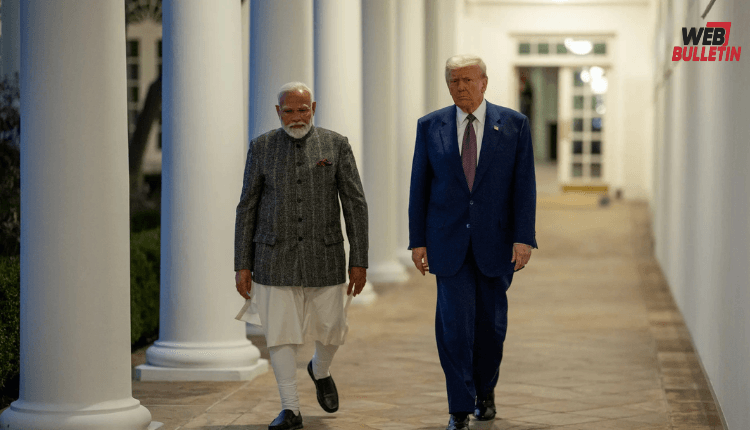
Key details have emerged from the recently agreed Interim Trade Framework between India and the United States, aimed at boosting bilateral trade by easing tariff and non-tariff barriers. The agreement is expected to provide significant relief to Indian exporters and improve access to the US market.
Under the framework, the United States has agreed to substantially reduce tariffs on Indian goods. Earlier, Indian exports were subject to a cumulative 50 per cent tariff, which included an additional 25 per cent penalty imposed over India’s purchase of Russian oil. Following the interim agreement, Washington has agreed to bring down the final tariff rate on Indian products to 18 per cent, marking a major rollback.
Mutual Tariff Reductions Planned
As part of reciprocal commitments, India has agreed to lower or remove tariffs on a range of US industrial, food, and agricultural products. Once the agreement comes into effect, the US will also eliminate reciprocal tariffs on key Indian exports such as pharmaceuticals, gems and jewellery, diamonds, and aircraft components.
Focus on Non-Tariff Barriers
Both countries have also agreed to address long-standing non-tariff barriers that have impacted trade flows, particularly in the medical devices, agriculture, and information and communication technology (ICT) sectors.
India has assured the US of steps to ease market access for American medical devices, streamline import licensing procedures, and review quantitative restrictions on US ICT products. Additionally, within six months of the framework’s implementation, India will assess the possibility of accepting US or internationally recognised standards in select sectors.
Major Purchases from the US
According to US President Donald Trump, who shared details on social media platform Truth Social, India plans to purchase $500 billion worth of energy products, aircraft and aviation parts, metals, coal, and technology goods from the US over the next five years. This is expected to significantly strengthen trade and strategic ties between the two countries.
Digital Trade and Technology Cooperation
Digital trade will form a core pillar of the interim framework. Both sides have committed to removing discriminatory or overly restrictive digital trade practices. The agreement also seeks to expand trade in advanced technologies, including GPUs used in data centres, while deepening cooperation in the technology sector.
Scope for Further Trade Liberalisation
The framework provides flexibility for future adjustments. Any changes in tariff structures will allow both countries to revise their respective obligations. The two sides have also agreed to continue negotiations toward a broader Bilateral Trade Agreement (BTA) to further expand market access.
The US has indicated it will review existing tariffs on Indian goods with the possibility of reducing or removing them as discussions progress.