

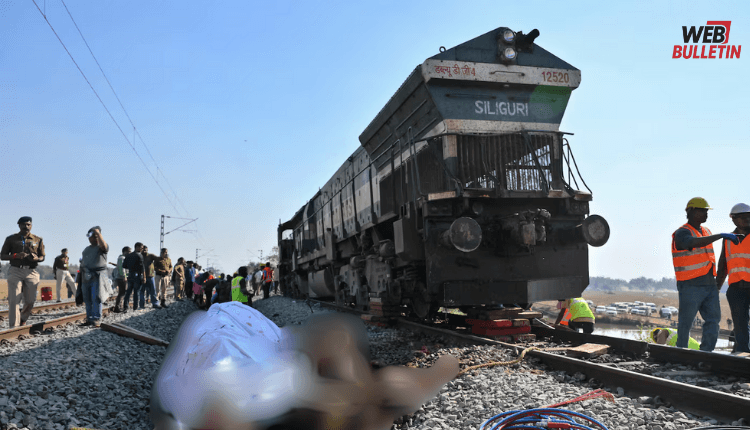
A tragic accident unfolded early Saturday in India’s northeastern state of Assam when a high-speed passenger train struck a herd of wild Asiatic elephants crossing the railway tracks, killing seven elephants and injuring a calf, according to local authorities.
What happened
The incident occurred in a forested region about 125 km southeast of Guwahati, Assam’s capital.
A passenger train traveling at high speed collided with a herd of nearly 100 elephants as they crossed the tracks.
Despite the train driver applying emergency brakes after spotting the animals, the train was unable to stop in time.
Impact of the collision
Seven elephants died on the spot, while a young calf was seriously injured.
The force of the collision caused the engine and five coaches to derail.
No passengers were injured, officials confirmed.
Veterinary teams later conducted post-mortem examinations on the dead elephants before arrangements were made for their burial.
Passengers and train services
The train involved was the Rajdhani Express, carrying around 650 passengers from Sairang in Mizoram to New Delhi.
Coaches that remained on track were reconnected, allowing the train to continue its journey.
About 200 passengers from the derailed coaches were shifted safely to Guwahati on another train.
Elephant–train collisions in Assam
Assam is home to an estimated 7,000 wild Asiatic elephants, one of the largest populations in India.
Elephant movement across railway tracks is common, especially during the harvest season when animals enter farmland in search of food.
Since 2020, at least a dozen elephants have been killed in similar train accidents across the state.
Indian Railways stated that the accident did not occur in a designated elephant corridor, though wildlife crossings remain a persistent challenge in the region.
A recurring conservation concern
The incident has once again raised concerns over train speeds, wildlife safety, and habitat fragmentation in Assam. Conservationists have long called for stricter speed limits, early-warning systems, and better coordination between railways and forest departments to prevent such tragedies.