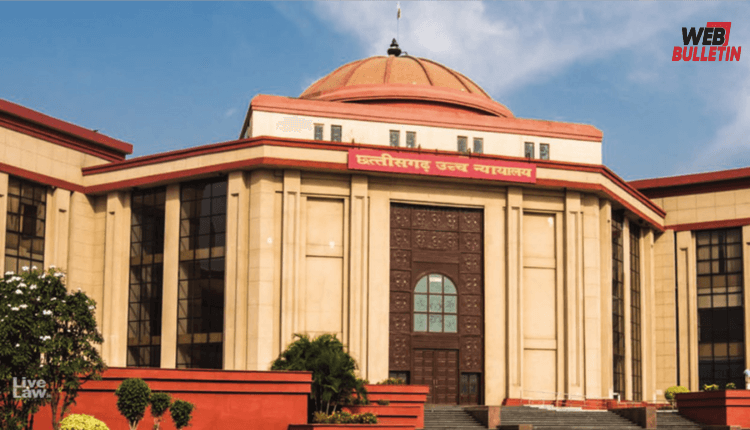

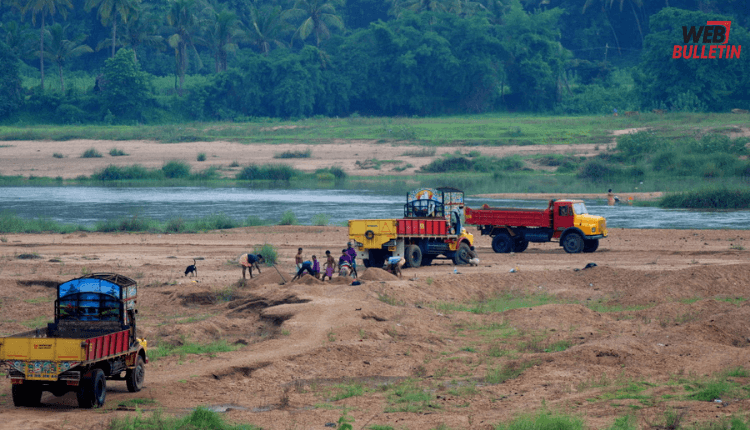
The National Green Tribunal (NGT) has taken a firm stand against long-running cases of illegal sand mining and transportation in the district, tightening scrutiny not only on mining operators but also on officials accused of failing to act. Acting on NGT directions, accountability has now been fixed on officers who allegedly ignored violations, with a high-level joint inquiry ordered.
As per the tribunal’s directions, the District Magistrate and a representative of the Chhattisgarh Environment Conservation Board (CECB) will jointly conduct a detailed investigation into the matter. The probe team has been asked to submit a comprehensive report within 42 days to the NGT’s principal bench in Bhopal.
Penalties Collected, But No Deterrence
According to official data, the district mining department took action over the past year in cases involving illegal extraction, transportation and storage of sand, murum, gravel and flagstone. A total of 1,132 vehicles were seized during this period, along with nearly 40 machines, including poclains and chain-mounted equipment. Penalties amounting to ₹3.85 crore were imposed and recovered.
Despite these figures, the NGT observed that no strict or exemplary action was taken in serious cases. In most instances, cases were settled on the spot after collecting fines, and crucial matters were not even forwarded to the NGT, undermining the intent of environmental law enforcement.
Clear Directions From the Tribunal
The NGT has reiterated that illegal sand mining is not merely a case of revenue loss but poses a serious threat to the environment. The tribunal stressed that confiscation of vehicles or imposition of fines alone is insufficient. It made it clear that offenders must face stringent legal action, along with mandatory environmental compensation for ecological damage.
On this basis, the tribunal directed the Member Secretary of the CECB to initiate legal proceedings against individuals involved in illegal mining, as well as officials found responsible for inaction. The compliance report must be submitted within 42 days. The next hearing in the matter is scheduled for April 20, 2026.
Vehicles Seized, Kingpins Untouched
The bench, comprising Judicial Member Sheo Kumar Singh and Expert Member Dr. A. Senthil Vel, noted that while several vehicles engaged in illegal transport were seized, effective action against the main perpetrators was missing. The tribunal also took note of allegations that some cases were deliberately removed from official records, terming it a serious administrative lapse and ordering a thorough examination of the entire episode.
Officials Named as Respondents
The NGT found that even after cases came to the notice of the district mining department, concerned officers chose to ignore violations instead of initiating action. As a result, the Member Secretary of the CECB, the Deputy Director of the Mining Department, Chhattisgarh, and the District Mining Officer, Raipur, have been named as respondents in the case.
Violation of Mining and Environmental Norms
Under existing rules, mining outside approved areas, use of heavy machinery in riverbeds, tampering with natural water flow, and causing environmental damage require mandatory registration of FIRs. Illegal mining is a serious offence, punishable with imprisonment ranging from two to five years and fines of ₹5 lakh or more. Additionally, the NGT can impose substantial compensation for environmental damage. Despite these provisions, district authorities reportedly failed to refer cases to the tribunal.
Hardidih Anicut Case Raises Fresh Questions
The issue gained further attention following revelations about repeated illegal mining near the Hardidih anicut, where gates were allegedly opened frequently to facilitate sand extraction. Reports indicated the involvement of Vinod Agrawal, president of the State Haulage Transport Association, in operations at the site.
Notably, a day after the matter was reported in the media, illegal mining allegedly resumed using chain-mounted machines in the river. No FIR was registered, nor were all machines fully seized. Although a case was registered by the mining department, action was limited to seizing just one chain-mounted machine and a submersible unit, despite the presence of three such machines at the site.
In contrast, the NGT had imposed a penalty of ₹17 crore in a similar case in Datia district of Madhya Pradesh, highlighting the disparity in enforcement and further strengthening the tribunal’s concerns over lax action in the present case.