
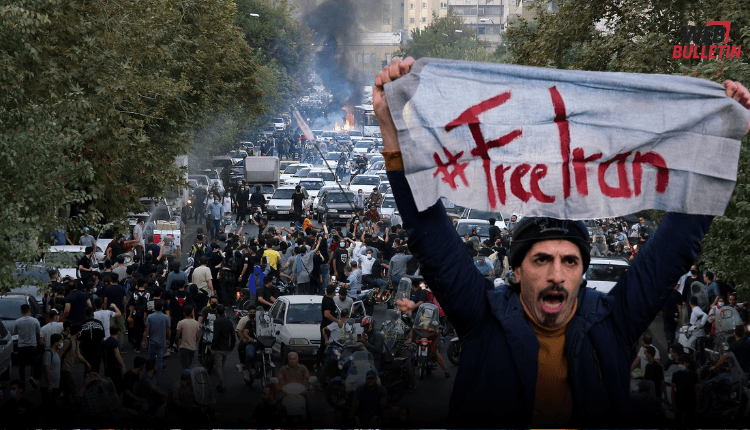
Tehran and several other Iranian cities witnessed large-scale anti-government protests late Saturday night, as thousands of people took to the streets despite a nationwide internet shutdown and heavy security deployment. Activists say this is the biggest wave of protests Iran has seen in over three years.
The unrest, now in its second week, has led to a violent crackdown, mounting casualties, and growing international concern — particularly from the United States.
What’s happening on the ground
Protesters were heard chanting anti-government slogans in Tehran, Mashhad, and other major cities.
Demonstrations largely took place at night, with people clapping, chanting, and waving mobile phone lights.
Social media videos — many unverified — show fireworks, blocked roads, burning debris, and clashes with security forces.
Some footage is believed to have been shared using Starlink satellite internet, bypassing Iran’s blackout.
According to rights groups cited by the Associated Press, at least 544 people have been killed, most of them protesters.
The exact number cannot be independently confirmed due to strict limits on information coming out of Iran.
How the protests began
The protests started on December 28 over the collapse of Iran’s economy.
The Iranian rial has fallen sharply, trading at over 1.4 million rials to one US dollar.
Rising prices, sanctions, and economic hardship quickly turned protests into direct challenges to Iran’s clerical leadership, in power since 1979.
Reports of a harsh crackdown
The Center for Human Rights in Iran (CHRI) says it has received eyewitness accounts suggesting hundreds may have been killed during the internet shutdown.
One verified video showed dozens of bodies outside a morgue near Tehran, with families searching for missing relatives.
Rights groups describe the situation as a “massacre under blackout.”
Iran blames foreign powers
Iranian officials have accused the United States and Israel of fueling unrest.
President Masoud Pezeshkian claimed “terrorists” backed by foreign enemies were attacking mosques, banks, and public property.
State media announced nationwide rallies to condemn what it called “US- and Israel-led terrorist actions.”
Trump’s response and rising tensions
US President Donald Trump described the protests as a “freedom movement.”
Trump said Iran had shown interest in talks after he warned of possible US action.
“We’re looking at very strong options,” Trump said, warning of unprecedented retaliation if Iran struck US targets.
He added that his administration was considering military, cyber, and economic measures, along with support for protesters online.
Trump also said he would speak to Elon Musk about restoring internet access in Iran through Starlink.
Iran has not officially confirmed any outreach for negotiations.
Warnings from Iran’s leadership
Iran’s parliament speaker Mohammad Baqer Qalibaf issued a strong warning:
He said any attack on Iran would make US military bases, ships, and regional assets legitimate targets.
Analysts note that any major military decision would ultimately lie with Supreme Leader Ayatollah Ali Khamenei, 86.
However, experts also point out that Iran’s air defenses were weakened during last year’s conflict with Israel, limiting its military options.
The bigger picture
Iran now faces a deepening internal crisis, international pressure, and the risk of wider regional conflict. With protests continuing, information restricted, and global powers watching closely, the situation remains highly volatile.