
India has been invited to join a new international body called the Board of Peace, proposed and led by former US President Donald Trump, aimed initially at guiding the peace process in Gaza. However, in the months since its announcement, the scope and structure of the Board appear to have changed significantly, prompting questions about its authority, purpose, and implications for member countries.
Below is a simplified explanation of what the Board of Peace is, how it has evolved, and why it has become controversial.
What Is the Board of Peace?
The idea of the Board of Peace was first unveiled by Donald Trump in September last year as part of a 20-point peace plan for Gaza. The proposal suggested placing Gaza under a temporary transitional administration run by a technocratic and politically neutral Palestinian committee. This committee would manage everyday public services.
Oversight of this transitional setup was to be carried out by an international body named the Board of Peace, to be headed by Trump. At the time, critics noted that this arrangement would effectively give the former US President significant influence over Gaza’s future governance.
Despite reservations, the original peace plan and the Board’s limited role received approval from the United Nations in November 2025.
How the Board’s Role Has Changed
The charter now being circulated among invited countries outlines a far more expansive mandate than originally envisioned. Instead of focusing solely on Gaza, the Board is described as a new international organisation and transitional governing authority with ambitions extending beyond the Middle East.
According to the invitation letter shared by the US ambassador to India on social media, the Board aims not only to stabilise peace in the region but also to pursue a broader approach to resolving global conflicts.
Notably, the updated charter does not mention Gaza by name. Instead, it emphasises moving away from existing international institutions that it claims have “too often failed,” and calls for a faster, more flexible global peace-building framework.
Who Has Been Invited to Join?
Invitations have reportedly been sent to a wide range of countries across different geopolitical blocs. These include Hungary, Albania, Greece, Canada, Turkey, Cyprus, Egypt, Jordan, Paraguay, and Argentina. Pakistan has also confirmed receiving an invitation, and India’s invitation followed soon after.
Membership is offered for a three-year term, but the charter includes a provision allowing countries to become permanent members by paying a one-time contribution of $1 billion in the first year.
Questions and Concerns
Several aspects of the Board have raised red flags among analysts and diplomats:
Departure from UN Approval: The UN-approved mandate was limited to Gaza and valid only until the end of 2027. The new charter introduces permanent membership and a global role, neither of which were part of the original approval.
Parallel to the United Nations: The charter contains 13 articles covering membership rules, financial contributions, dispute resolution, and governance—features strikingly similar to the UN, leading critics to label it a “parallel UN.”
Undefined Powers: The Board claims authority not only in conflict zones but also in regions “threatened by conflict,” without clearly defining what constitutes such a threat.
Trump’s Central Role
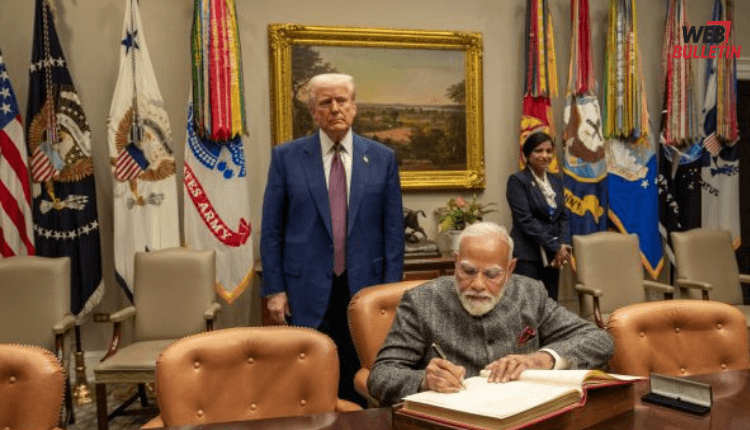
One of the most controversial elements is Trump’s position within the Board. The charter states that Donald J. Trump will serve as the inaugural Chairman, separate from his role as a representative of the United States.
Importantly, the chairman can only be removed if he resigns voluntarily or is unanimously declared incapable by an Executive Board largely made up of his own appointees. Even in that case, the successor would be chosen by Trump himself.
This means that any country joining the Board would be committing to an organisation where Trump remains at the helm, regardless of whether he holds public office in the US.
Who Makes Up the Executive Board?
The founding Executive Board includes several prominent figures:
US Secretary of State Marco Rubio
US Special Envoy to the Middle East Steve Witkoff
Jared Kushner, Trump’s son-in-law and businessman
Former UK Prime Minister Tony Blair
American businessman Marc Rowan
World Bank Group President Ajay Banga
US National Security Adviser Robert Gabriel
What This Means for India
Accepting the invitation would require India to formally agree to be bound by the Board’s charter. This raises important questions about sovereignty, international commitments, and alignment with existing global institutions such as the UN.
As New Delhi weighs its options, the evolving nature of the Board of Peace ensures that the decision will be closely watched—both at home and abroad.