

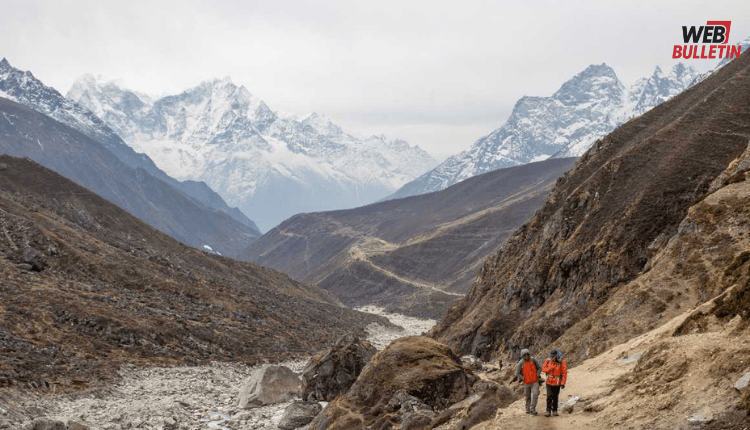
The Himalayas are experiencing unusually low snowfall this winter, leaving mountains bare in areas that should normally be snow-covered, meteorologists say. Experts warn that this trend, seen repeatedly over the past five years, could have serious implications for water supply, ecosystems, and local communities.
Declining Snowfall in the Himalayas
Winter snow in the Himalayas has decreased significantly compared to averages recorded between 1980 and 2020.
Rising temperatures are causing the snow that does fall to melt faster, while lower-elevation areas are increasingly seeing rain instead of snow.
Scientists refer to the phenomenon as a “snow drought”, a condition where seasonal snow becomes scarce.
Impact on Water and Ecosystems
Snowmelt is a crucial source for the region’s rivers, feeding drinking water, irrigation, and hydropower systems.
Reduced snowfall and faster snowmelt threaten short-term water supply and could exacerbate long-term water scarcity for millions across northern India, Nepal, and other Himalayan nations.
Dry winter conditions increase the risk of forest fires and make mountains more vulnerable to rockfalls, landslides, and glacial lake bursts.
Recent Weather Data
The Indian Meteorological Department (IMD) reported almost no precipitation in northern India in December, including snow in key Himalayan states.
Between January and March, several regions including Uttarakhand, Himachal Pradesh, Jammu & Kashmir, and Ladakh may receive up to 86% less rainfall and snowfall than long-period averages.
Meteorologists say this drop is not a one-off event, but part of a five-year trend of declining winter precipitation.
Scientific Findings
A 2025 study using four datasets from 1980 to 2021 confirms decreased precipitation in the western and central Himalayas.
Snowfall in the northwestern Himalayas has dropped by 25% in the past five years compared to long-term averages, according to researchers at the Indian Institute of Technology, Jammu.
Nepal, covering the central Himalayas, has seen minimal rainfall since October, with below-normal snow persistence reported in four of the last five winters.
The Role of Westerly Disturbances
Winter precipitation in the Himalayas largely depends on westerly disturbances, low-pressure systems that bring moisture from the Mediterranean.
Scientists note these systems are weaker and less reliable, reducing snow and rainfall in the region.
Some studies also suggest the disturbances are tracking slightly north, further limiting their impact on the mountains.
Double Threat for the Himalayas
Experts warn that the Himalayas face a dual crisis:
Accelerated glacier melt due to rising temperatures.
Declining snowfall, reducing snow reserves that feed rivers in spring.
This combination could have major consequences for nearly two billion people depending on rivers originating from the Himalayas, affecting water security, agriculture, and energy production across the region.
The shrinking winter snow cover is more than just a visual change. With glaciers retreating and snow becoming scarce, the Himalayan region faces escalating environmental challenges. Scientists stress that urgent attention and climate action are needed to mitigate the long-term impacts on water supply, ecosystems, and millions of lives downstream.